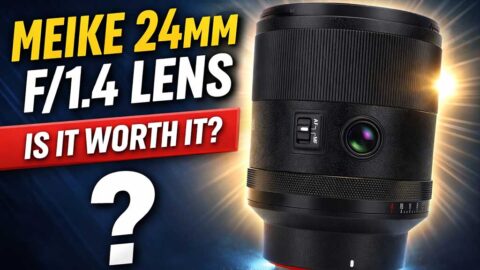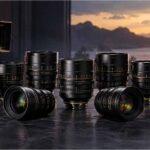

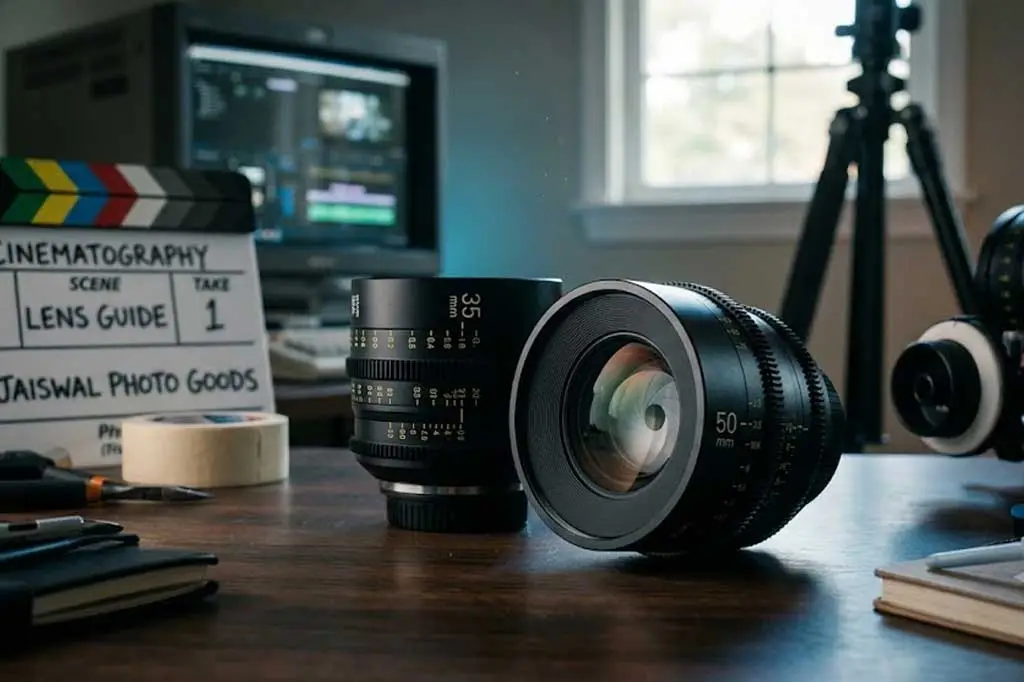
The best lens for cinematography depends on your shooting style, but the 35mm and 50mm focal lengths are widely considered the gold standard for cinematic storytelling because they match human eye perspective. Dedicated Cinema Lenses (Cine Lenses) with step-less aperture rings, minimal focus breathing, gear rings for follow-focus systems, and long focus throws deliver professional video results. Top cine and hybrid video lens choices include Sigma Art Primes (18-35mm / 24-70mm f/2.8) for hybrid autofocus, Sirui Anamorphic lenses for widescreen cinema flare, and TTArtisan / Meike Cine Primes for manual cinema control on a budget.
🎬 Which Lens is Good for Cinematography? A Filmmaker's Buying Guide
In cinematography, your lens shapes the narrative far more than the camera body. While camera sensors capture light, the optical lens determines depth of field, background blur (bokeh), focus transition, flare characteristics, and frame perspective.
Choosing the right cinematography lens requires understanding key factors like prime vs zoom, cinema-grade features, and focal lengths.
1. Cinema Lens (Cine Lens) vs. Photo Lens: Key Differences
Why do cinematographers prefer dedicated cinema lenses over standard photo lenses?
Stepless De-Clicked Aperture (T-Stops): Cine lenses use T-stops (transmission stops) instead of f-stops, measuring exact light transmission. They allow smooth iris pulls without clicks or exposure jumps during continuous recording.
0.8 MOD Gear Rings: Standard gear teeth integrated into the focus and aperture rings allow seamless attachment to manual or wireless Follow Focus systems (like DJI Focus Pro).
Minimal Focus Breathing: High-end cinema lenses prevent the field of view from shifting or “zooming in” when racking focus from foreground to background.
Unified Build & Front Diameter: Sets of cine lenses usually share identical front filter thread sizes, weight, and gear positioning, enabling quick lens swaps on gimbals and matte boxes without re-balancing.
2. Best Focal Lengths for Cinematography
| Focal Length Range | Visual Effect & Storytelling Role | Best Cinematic Use Cases |
| 14mm – 24mm (Ultra-Wide) | Wide spatial depth, dramatic distortion, expansive environment view | Establishing shots, action sequences, gimbal movement, indoor spaces |
| 35mm (Wide-Normal) | Natural perspective, slight context inclusion around subject | Documentary, narrative dialogue, street videography, interviews |
| 50mm (Standard/Normal) | Equivalent to human visual field, zero perspective distortion | Medium character close-ups, emotional storytelling, cinematic b-roll |
| 85mm – 135mm (Telephoto) | High background compression, creamy bokeh, tight subject isolation | Cinematic portrait close-ups, subtle emotional reactions, outdoor b-roll |
3. Best Lenses for Cinematography by Category
A. Best All-Rounder Zoom Lenses for Filmmaking & Commercials
If you shoot run-and-gun documentaries, weddings, or corporate video projects, speed and versatility are critical.
Sigma 24-70mm f/2.8 DG DN Art (Full-Frame): The industry standard zoom lens for video. Sharp across the entire range with fast autofocus and constant aperture.
Sigma 18-35mm f/1.8 DC HSM Art (APS-C / Super35): Legendary video zoom lens with an ultra-bright f/1.8 constant aperture that performs like three prime lenses in one.
B. Best Budget Manual Cine Primes for Beginner & Indie Filmmakers
Manual focus forces precise control and gives footage a tactile cinematic aesthetic.
TTArtisan Cine Primes & Meike Mini Cine Series: Available in various focal lengths (e.g., 25mm, 35mm, 50mm T2.1/T2.2). Fully manual with 0.8 MOD gearing, metal construction, and silky smooth focus throw.
C. Best Anamorphic Lenses for Widescreen Hollywood Aesthetic
Sirui Anamorphic Cine Lenses (1.33x / 1.5x): Deliver signature horizontal blue lens flares, oval bokeh, and ultrawide cinema aspect ratio (2.39:1) without cropping image resolution.
📊 Quick Lens Comparison for Filmmakers
| Lens Model | Sensor Coverage | Aperture / T-Stop | Autofocus Support | Ideal Cinematic Style |
| Sigma 24-70mm f/2.8 Art | Full Frame | f/2.8 | Yes (Fast AF) | Commercials, Events, Documentaries |
| Sigma 18-35mm f/1.8 Art | APS-C / Super35 | f/1.8 | Yes | YouTube, Music Videos, Short Films |
| Sirui 50mm T2.9 1.6x | Full Frame | T2.9 | No (Manual) | Anamorphic Widescreen Feature Films |
| TTArtisan / Meike 35mm Cine | APS-C / Full Frame | T2.1 | No (Manual) | Indie Narrative, Student Films, B-Roll |
| Sony FE 35mm f/1.4 GM | Full Frame | f/1.4 | Yes (Linear Motors) | Low-Light Cinematic Video, Gimbal Work |
FAQ
Q1: What makes a lens "cinematic"?
A cinematic lens is characterized by soft background separation (shallow depth of field), smooth focus roll-off, controlled lens flare, minimal chromatic aberration, and little to no focus breathing when shifting focus between subjects.
Q2: Should I use Prime or Zoom lenses for cinematography?
A: Prime lenses (fixed focal length) are generally preferred for narrative cinema because they offer wider apertures (t-stops), sharper glass, lighter weight, and consistent optical character. Zoom lenses are better suited for live events, documentaries, and fast-paced video production where changing lenses frequently is impractical.
Q3: Is autofocus used in professional cinematography?
A: Traditionally, cinematographers rely exclusively on manual focus pulled by a camera operator or dedicated Focus Puller. However, modern mirrorless cameras with advanced AI Eye-AF tracking (e.g., Sony FX3/FX6 or Canon C70) make autofocus reliable for solo videographers and gimbal operators.
Q4: Why are T-stops used instead of F-stops on cinema lenses?
A: F-stops measure the physical mathematical ratio of the focal length to the aperture diameter, whereas T-stops (Transmission stops) measure the actual amount of light that passes through the lens glass onto the camera sensor. T-stops guarantee exact exposure consistency across different cinema lenses.
Q5: What is focus breathing in video recording?
A: Focus breathing is an optical flaw where the field of view expands or contracts (zooms slightly) as you pull focus from near to far objects. Dedicated cine lenses are engineered to eliminate this effect, keeping framing steady during dramatic focus pulls.
🛒 Gear Up Your Film Production at Jaiswal Photo Goods!
Looking for the best camera lenses, adapter rings, lens filters (ND & CPL), follow-focus gear, or light stands for your next film shoot? Explore our wide range of photography and videography accessories at unbeatable prices.